oceans

Peacock in the Ocean

Peacock in the Ocean

We’re loading up the SS E&E- our research boat with campers for the next three days as we head out to sea! It’s time for all our campers to grab their scuba gear and go diving! We’re exploring the ocean floor today! If we’re looking for a flat fish, so keep those eyes peeled for the Peacock flounder!

peacock flounder

Peacock Flounder Fun Facts:

  • They are known as the flowery flounder.
  • Peacock flounders have flower shaped blue spots.
  • They have have two eyes on the left side of their body.
  • Each eye can move in all directions. They can move independently of each other.
  • Flounder fry (babies) swim like normal fish. Their eyes on each side of their body. As they mature the eyes move to one side! CRAZY!
  • Peacock flounders prey on crabs, shrimp and small fish.
  • Peacock flounders have specialized skin cells that allow them to change their color to match their surroundings! They can do this in as little as 8 seconds.

peacock flounder2

Peacock flounders are amazing animals! These flat fish are masters of camouflage! We are glad our campers were able to spot a few! Hehehe!



Categories: adventure, Animals, camp, Children, conservation, education, Environment, fish, nature, oceans, science, Today's Post, wildlife | Tags: , , , , , , , , , , | 1 Comment

Thorny Sea Star

Thorny Sea Star

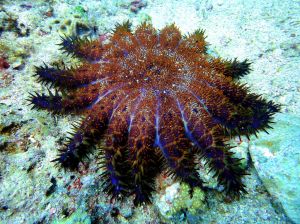
We are meeting our last sea star of the week!  This one is best to be observed but not to touch! Ouch- watch out for the crown-of-thorns sea star.

Crown of Thorns

Crown-of-thorn sea star fun facts: 

  • The thorns on this sea star are venomous.
  • These indimidating looking sea stars predate on coral!
  • They have only one predator- giant triton sea snail.
  • As you can see they have more than five arms.
  • They do have tube feet to move them along the reefs.
  • Unfortunately these predators have grown in numbers. Too many of them and that can mean trouble for a reef. They can destroy large areas.
  • Scientists and conservationists now will actively remove them when there is population boom.

IMG_0302

We love sea stars of all kinds, but this one might have gone to the dark side. Keeping a balance in habitats is crucial for all the animals that live there.

Categories: adventure, Animals, camp, Children, conservation, education, Environment, nature, oceans, sea stars, Today's Post, wildlife | Tags: , , , , , , , , , , , , | 1 Comment

Bring Your Basket- Star!

Bring Your Basket – Star!

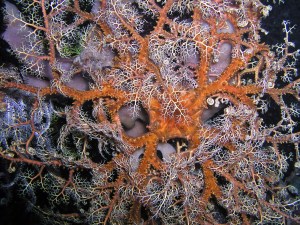
We are so excited to see everyone here! It’s Sea Star week here at camp! You may know these amazing echinoderms as starfish, but scientists are now using sea star as these animals are not fish! We bet you’d like to know what an echinoderm is though– it’s an animal that has radial symmetry (arms radiating from a central body) and a hard covering. Other echinoderms include sea urchins, sea cucumbers and sand dollars.

Today, we are meeting one of the craziest enchinoderms around the basket star. Woohoo!

IMG_0297

Basket Star Fun Facts: 

  • Basket stars belong to the brittle star family.
  • Most Basket stars are found in deep waters.
  • They can reach up to 28 inches across. The central disk is around 5 1/2 inches across.
  • They have 5 arms. Those 5 arms then have many many branches.
  • They have calcium carbonate structures called ossicles. These give all those arms flexibility and stability.
  • Some basket stars feed on plankton or small crustaceans.
  • They use spines and hooks to move food up their mouths on the central disk.
  • Basket stars also have tube feet to move them around.

OLYMPUS DIGITAL CAMERA

These amazing creatures have no brain, but they do have a complex nervous system. The oceans house the craziest critters on the planet!

Categories: adventure, Animals, camp, Children, conservation, education, Environment, nature, oceans, science, sea stars, Today's Post, wildlife | Tags: , , , , , , , , , , , | 1 Comment

Camp E&E by the Sea

Camp E&E by the Sea

FullSizeRender

Welcome back to camp everyone! We trust that you had a lovely holiday! We know we did! We have set up Camp E&E by the sea for the month of July and in to August! The cabins are ready and this year they are spiffy! We will also have some great tents for those that want to sleep by the ocean and hear the waves at night.

We will be meeting the animals that call the shore and ocean home! We have set up the craft cabin and here at the shore it’s run by Carl the Crafty Crab! We’ll also be enjoy a whole we dedicated to our cartilaginous friends- sharks and rays!

So back up your trunks (the box not the elephant nose) and get your cabin assisngment and let’s get ready to enjoy all the Camp E&E by the Sea brings us!

Dont’ forget your water shoes, surfboards, stand up boards, extra sunsuncreen, bug repellant (the gnats can be terrible), a flashlight with a red lens (must not disturb sea turtles) and your beach towels!


We will see you on Monday for Sea Star Week!

EA012875-DEEE-4FB5-8E0F-6B9F24E96EA1


Categories: adventure, Animals, camp, Children, conservation, education, Environment, nature, oceans, science, sea stars, Today's Post, wildlife | Tags: , , , , , , , , , | 1 Comment

Another Ocean Giant

Another Ocean Giant

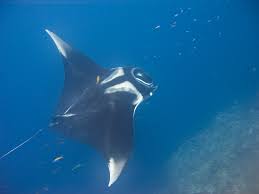
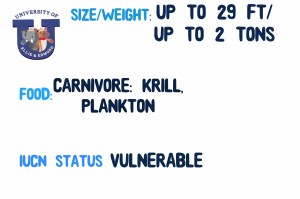
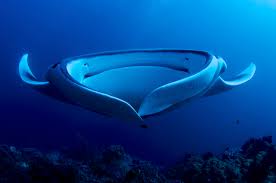
We met another giant of the ocean on our snorkeling trip- the Giant Manta Ray! These graceful creatures are so fun to watch “fly” through the water!  They are truly magical.

giant manta

IMG_4350


Date: 5/24

Location: Raja Ampat Islands

Giant Manta Ray Fun Facts:

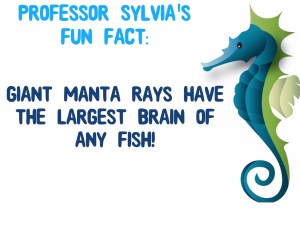
  • Giant Manta Rays are the largest member of the ray family.
  • They are filter feeders and use their front lobes to push food in their mouths. Recent discoveries have shown that they also eat larger deep sea fish!
  • Scientists guess that they can live up to 50 years.
  • Mantas get their name for the Spanish word that means blanket.

FullSizeRender

  • Manta rays are covered in a protective mucus coating.
  • Manta rays do not have the venomous barb.
  • It is thought they have been around 5 million years.

giant manta2

giant manta

Our time here in these amazing islands is done and we are bummed. There is so much more to see and do! We head back to the University and get ready for camp to start in June! We will definitely be back!


Categories: adventure, Animals, Children, conservation, education, endangered species, Environment, fish, nature, oceans, science, Today's Post, wildlife | Tags: , , , , , , , , | 1 Comment

One Big Mollusk!

One Big Mollusk!

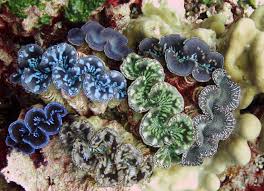
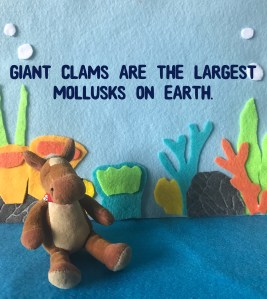
While snorkeling we came upon one big animal- the giant clam! And they are a sight to see! We had to share this amazing creature with you!

giant clam

IMG_4305


Date: 5/23

Location: Raja Ampat Islands

Giant Clam Fun Facts:

  • Giant clams live their whole lives in one spot on the reef. It’s hard to move 500 lbs of body.
  • They share their bodies with algae. They feed off the sugar and proteins the algae give off.

IMG_4304

  • Each clam has a unique color pattern.
  • Giant clams have a siphon to pull in water in plankton.
  • They can not close their shell completely.
  • Giant clams can live up to 100 years!


We love these giant mollusks! Do you remember the largest land arthropod? We met them not to long ago! Mollusks are so amazing!

Categories: adventure, Animals, Children, conservation, education, endangered species, Environment, nature, oceans, science, Today's Post, wildlife | Tags: , , , , , , , , , | 1 Comment

Barracuda!

Barracuda!

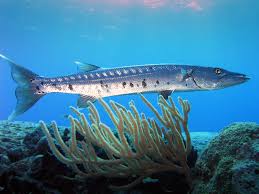
We had a blast snorkeling the next day after our night drive. We saw one of the coolest fish in all of the oceans- the barracuda! They even have their own song! We bet you don’t much about these long predators. Well it’s time to change that!

barracuda2

IMG_4298


Date: 5/22

Location: Raja Ampat Islands

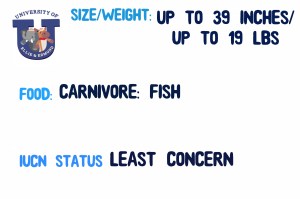
Barracuda Fun Facts:

  • Barracuda have underbites- hehehe!
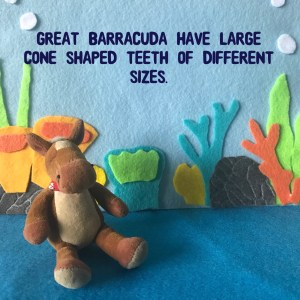
  • They have large powerful jaws.

FullSizeRender

  • They are known to hunt in groups and gather a school of fish in a area to guard them when they are hungry.
  • Barracuda have a reputation for being aggressive to divers, but that reputation in unwarranted.
  • It is not a good idea to go spear fishing around barracuda though, as they make away with your meal.
  • They have few natural predators.

barracuda3

barracuda


It is always fun to spot some barracuda! We like to wave and swim the in the other direction. They may not be aggressive, but those teeth don’t say let’s be friends.

Categories: adventure, Animals, Children, conservation, education, Environment, fish, nature, oceans, science, Today's Post, wildlife | Tags: , , , , , , , , , , | 1 Comment

Firefish!

Firefish!

We saw of the most amazing fish on our night dive trip today! The one we are meeting toady was so crazy looking and a bit scary! You think sharks are scary? Wait to til you meet a venomous fish!

firefish

IMG_4238


Date: 5/18

Location: Raja Ampat Islands

Blackfoot Firefish Fun Facts:

  • Blackfoot firefish are members of the scorpionfish family. Other members include the famous lionfish.
  • They use their flashy fins and spines to ward away predators.
  • They also use those fins to corner prey.
  • Blackfoot firefish are mostly nocturnal.
  • They are know to bury themselves in the the sand to ambush predators.
  • Their spines are venomous.


We were surprised to see one of these amazing fish! We have spotted lionfish before, but not this species! Believe us, this is one fish you want to spot from a good distance! And don’t touch those spines!

Categories: adventure, Animals, Children, conservation, education, Environment, fish, nature, oceans, science, Today's Post, wildlife | Tags: , , , , , , , , , | 1 Comment

Feeling Blue

Feeling Blue

Who’s feeling blue? Not us, but we are meeting a very blue echinoderm (sea stars, sand dollars & sea urchins)! That’s right- we’re meeting the blue sea star!

seastar

IMG_4184


Date: 5/16

Location: Raja Ampat Islands

Blue Sea Stars Fun Facts:

  • Blue sea stars come in several different shades of blue.
  • They have short yellow tube feet.
  • Blue sea stars are slow movers.
  • Blue sea stars can regenerate body parts.
  • They are also known as the Blue Comet sea star.

seastar2

There were numerous blue sea starts in the reef we were exploring! They are so gorgeous and brighten up the reef!


Categories: adventure, Animals, Children, conservation, Environment, nature, oceans, science, Today's Post, wildlife | Tags: , , , , , , , , , , | 1 Comment

Fancy Shrimp

Fancy Shrimp

We are back on the boat and we’re spending this week snorkeling and diving so we can meet some of the most amazing animals of the reef! It’s hard to chose who we should share with you guys even! The shrimp we saw today was so fantastic though- we knew you had to meet them!

harlequin shrimp

IMG_4188


Date: 5/15

Location: Raja Ampat Islands

Harlequin Shrimp Fun Facts:

  • Harlequin shrimp live in pairs.
  • They have two large claws and four walking legs.
  • Females are slightly larger than males.
  • Harlequin shrimp are secretive.

FullSizeRender

  • They flip over their sea star prey and eat the tube feet!
  • Harlequin shrimp are toxic from the sea stars they eat.

harlequin shrimp2

harlequin shrimp3


We were so excited to spot these tiny little shrimp. They are so colorful and amazing. We do recommend that is you are a sea star- you stay away.

Categories: adventure, Animals, Children, conservation, education, Environment, nature, oceans, science, Today's Post, wildlife | Tags: , , , , , , , | 1 Comment

Blog at WordPress.com.