Posts Tagged With: adventure

Tiny Marsupial

Tiny Marsupial

Well it doesn’t get much cuter than today’s animal! These tiny marsupials look like rodents, but they are not!

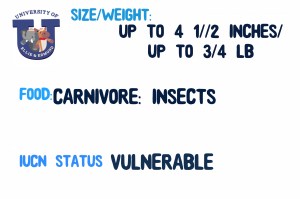
sandhill dunnart2

IMG_3325


Date : 4/5

Location: Great Victorian Desert

Sandhill Dunnart Fun Facts:

  • They are one of the largest members of the Dunnart family.
  • Sandhill dunnart have stiff black hairs on the underside of the tail.
  • These little marsupials are carnivores!
  • Their tails are longer then their bodies.

IMG_3352

  • They live in burrows under the spinifex hummocks shrubs.
  • Sandhill dunnarts store fat in their tails.

sandhill dunnart

These little marsupials are threatened unfortunately. There are efforts in Australian zoos to increase their numbers! Woohoo!

Categories: adventure, Animals, Children, conservation, education, endangered species, Environment, marsupial, nature, science, Today's Post, wildlife | Tags: , , , , , , , , , , , | 1 Comment

A Skink not a Skunk!

A Skink not a Skunk!

After we settled in at camp we decided where we should go on our first adventure! We wanted to meet a neat little lizard we knew lived in this habitat! We headed off for the day with our day packs full of snacks and MUD SPF 30 sunscreen!

great desert skink

IMG_3315


Date: 4/3

Location: Great Victorian Desert

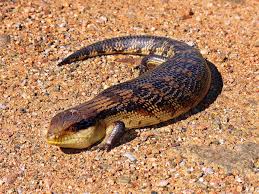
Great Desert Skink Fun Facts:

  • Great desert skinks vary in color from tan to grey or dark brown.
  • They store fat in their tales during the winter.
  • Males are slightly larger than females.
  • Great desert skinks live in complex burrows with several entrances and areas.

IMG_3316

  • A family group occupies the burrow. Babies stay with their family for up to three years.
  • They generally hunt at night in the hotter months.

great desert skink2

We had such fun going to look for these little short legged lizards! They remind us of another Australian skink- the blue tongued skink! They are both so cool! And they aren’t slimy at all- very smooth!

Categories: adventure, Animals, Children, conservation, education, endangered species, Environment, nature, reptiles, Today's Post, wildlife | Tags: , , , , , , , , , , | 1 Comment

Hello Little Lemur!

Hello Little Lemur!

We are meeting our last animal on Madagascar! It’s a lemur of course! We are so excited! We are heading to the desert of Australia for the month of April! Woot! Woot! Let’s meet this special animal first!

mouse lemur

IMG_3206


Date: 3/30

Location: Madagascar

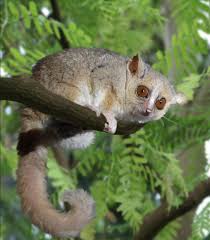
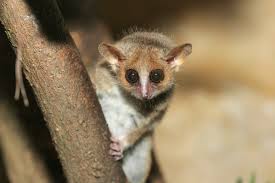
Grey Mouse Lemur Fun Facts:

  • Grey mouse lemurs are the largest members of the mouse lemur family. It is still one of the smallest primates in the world.
  • They are arboreal and nocturnal.
  • They forage for food alone, but sleep in groups in trees during the night.

IMG_3207

  • Those long tails help the mouse lemur navigate their treetop homes.
  • They store fat in their tails during the dry season, when food may not be as plentiful.
  • Grey mouse lemurs enter a daily state of torpor during the dry season. Their body temperatures drop and metabolism slow down to conserve energy.

mouse lemur2

mouse lemur3

We enjoyed watching these tiny lemurs forage during the night! Good thing we have night goggles! We have enjoyed our time on this magical island! We will have to come back!

Categories: adventure, Animals, Children, conservation, education, mammals, nature, science, Today's Post, wildlife | Tags: , , , , , , , , , , | 1 Comment

Civet Civet

Civet Civet!

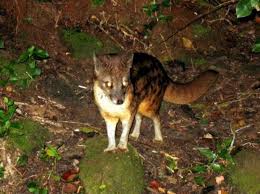
We spent the last nights of our adventure here in Madagascar looking for some really neat nocturnal animals! (And for those who asked- we are working on a glossary.)  We found the first of our discoveries on the forest floor looking for eats. This strange animal is so cool! We could hardly contain our excitement when we spotted it!

malagasy civet

IMG_3211


Date: 3/29

Location: Madagascar forest

Malagasy Civet Fun Facts:

  • Malagasy civets are shy animals.
  • They can be territorial. They scent mark their territories.
  • Malagasy civets are very vocal. They make a series of noises including grunts.
  • They spend their days asleep in trees and crevices.

IMG_3200

  • They are related to mongooses and fossa.
  • Malagasy civets are the second largest natural predator on Madagascar- the fossa is the largest.

malagasy civet2

We love these unusual little animals. They remind of us a raccoon and a fox put together! What do you think?

Categories: adventure, Animals, Children, conservation, education, endangered species, mammals, nature, science, Today's Post, wildlife | Tags: , , , , , , , , , | 2 Comments

Old Bright Eyes!

Old Bright Eyes!

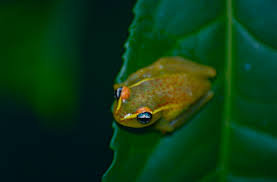
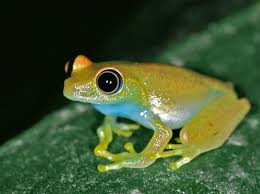
We spent our last day at camp this week looking for a small amphibian with big bright eyes. Good thing we have binoculars, because spotting these tiny frogs was not easy!

frog3

IMG_3040


Date: 3/23

Location: Madagascar

Green bright-eyed frog fun facts:

  • Green bright eyed frogs have a blue ring around the outer iris.
  • They are green with little spots and can change their color to a more reddish tone.
  • Green bright eyed frogs have webbed feet.

IMG_3041

  • During breeding season males call during the night to look for a mate.
  • Females lay their eggs in water.

frog2

frog


We had lovely time exploring the forest for these tiny frogs. So many sightings of them and other fascinating creatures! We really love this place!


Categories: adventure, amphibians, Animals, Children, conservation, education, Environment, nature, science, Today's Post, wildlife | Tags: , , , , , , , , , , | 1 Comment

Ghostly Sounds!

Ghostly Sounds!

Today, we met another super awesome lemur today! They aren’t as crazy looking as the aye-aye we met last week, but they are just as cool.

indri

IMG_3009


Date: 3/21

Location: Madagascar

Indri Fun Facts:

  • Indri are the largest lemur on earth.
  • They are arboreal and diurnal.
  • The native Malagasy name for them is babakoto.
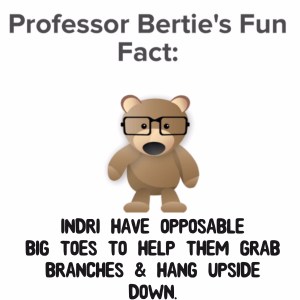
  • Indri leap in a upright position from tree to tree.

IMG_3010

  • Indri mate for life and live in small family groups.
  • Indri are known for their loud songs that can be sung several times a day! These songs/calls are as haunting as they are beautiful!
  • Indri are considered sacred among the native people of Madagascar.

indri3

indri2


We so enjoyed watching these amazing lemurs. Those calls are so loud! Unfortunately, Indri are critically endangered mostly due to habitat loss. It is crucial that we all work together to use our resources wisely! Let’s all recycle as much as possible!


Categories: adventure, Animals, Children, conservation, Environment, mammals, nature, science, Today's Post, wildlife | Tags: , , , , , , , , , , , | 1 Comment

One Tiny Lizard!

One Tiny Lizard!

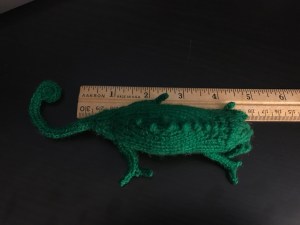
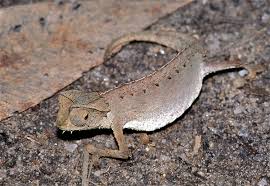
We headed into the forest to look for one of smallest lizards in the world! Madagascar is home to many species of chameleons. We wanted to find some of the smaller ones- the brown leaf chameleon. It takes a good eye, some nice binoculars and a great guide to find these cute reptiles!

chameleon2

IMG_3008


Date: 3/20

Location: Madagascar

Brown Leaf Chameleon Fun Facts:

  • Brown leaf chameleons resemble dried up leaves on the forest floor.

IMG_3011

  • When threatened, they curl up their legs and tail and roll over on their side and stay perfectly still.
  • Like other chameleons their eyes move independently of each other.
  • Male brown leaf chameleons attract a female by rocking their body and nodding their head.
  • Professor Carl is showing us how long the brown leaf chameleon is!

IMG_3019

  • Brown leaf chameleons are not always brown! They can be olive, green, beige or red!
  • They have a stiff ridge running down their spine.
  • Brown leaf chameleons are diurnal.

chameleon

We had a lovely day exploring the forest. We had to walk carefully to watch for these small reptile predators. We love chameleons and their crazy eyeballs and funny feet!


Categories: adventure, Animals, Children, conservation, Environment, nature, reptiles, science, Today's Post, wildlife | Tags: , , , , , , , , , , | 1 Comment

Hello Little Tenrec!

Hello Little Tenrec!

We spent our last day of the week in search of a very small mammal that looks like a hedgehog, but it’s not. The tenrec is found only in Madagascar and while they are similar they are not hedgehog relatives.

common tenrec

IMG_2892


Date: 3/16

Location: Madasgascar

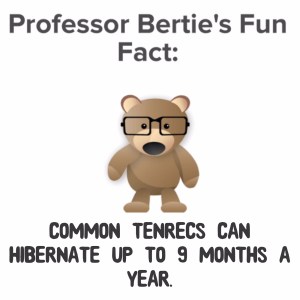
Common Tenrec Fun Facts:

  • They are also known as the tailess tenrec. They are the largest tenrec species.
  • Common tenrecs do have a tail- up to 1 1/2 cm in length.
  • Tenrecs are related is not related to hedgehogs. It is thought that is related to elephants, aardvarks and manatees.
  • Tenrecs roll in a ball and have spines similar to hedgehogs, but they do not have the same strong muscle structure of a hedgehog.

IMG_2893

  • Tenrecs roll in sand to help them keep clean.
  • They can have up 32 babies at at time. All of the babies are born without spines.

common tenrec2

We love hedgehogs and their non cousin the tenrec! Can you believe that they might be related to Ellie? Who doesn’t love those cute little feet and funny ears!


Categories: adventure, Animals, Children, conservation, education, Environment, mammals, nature, science, Today's Post, wildlife | Tags: , , , , , , , , , , , | 1 Comment

Aye-Aye Captain!

Aye-Aye Captain!

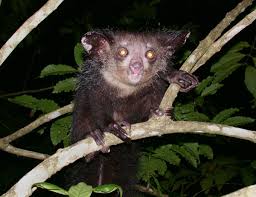
We slept all day after looking for frogs the night before! Our next adventure was at night too. We went looking for a shy and elusive primate that doesn’t look like a primate at all!

aye aye

IMG_2874


Date: 3/14

Location:  Madagascar

Aye-Aye Fun Facts:

  • Aye-aye’s are the largest nocturnal primate in the world.
  • They are members of the prosimian family, which includes lemurs.
  • They have one long stick like finger they use to grab grubs out of trees. They also use it to tap on trees and listen for bug tunnels!
  • Aye-aye’s are arboreal and rarely if never come to the ground.

IMG_2875

  • Aye-aye’s have long bushy tails to help them navigate their tree homes. In fact they have the longest tail of any prosimian!
  • They sleep during the day in nests of twigs. They rotate nests.
  • Aye-aye’s are solitary. They mark their territory with scent glands in their faces, necks and bums.

aye aye2

These wild and weird animals are alien looking! When scientists first discovered them they thought they were rodents! Nope- they are primates- related to apes, monkeys and lemurs. Who knew? The world’s rainforests are full such amazing creatures!

Categories: adventure, Animals, Children, conservation, endangered species, Environment, mammals, nature, science, Today's Post, Uncategorized, wildlife | Tags: , , , , , , , , , , , , | 1 Comment

Is That a Cat?

Is That a Cat?

We were so excited to meet today’s animal. We have seen this animal in zoos, but spotting this carnivore on Madagascar was a joy! We were jumping for joy- quietly of course!

fossa3

IMG_2774


Date: 3/8

Location: Madagascar

Fossa Fun Facts:

  • Fossas are solitary.
  • Fossas are related to mongooses and civets.
  • They are the largest predator on the island of Madagascar.
  • Fossas are excellent climbers and spent a great deal of time in the trees.

IMG_2775

  • Fossas use scent glands to mark their territory.
  • They have retractable claws.
  • Fossas have lost much of their forest home.

fossa2

fossa


It was great treat to spot this elusive and shy creature. They are gorgeous, stealthy and agile! Woohoo! We love fossas!
Categories: adventure, Animals, Children, conservation, education, endangered species, mammals, nature, science, Today's Post, wildlife | Tags: , , , , , , , , , , | 1 Comment

Blog at WordPress.com.