Posts Tagged With: birds

What the Quail?

What the Quail?

We are so excited to meet today’s bird! We have never met a quail before and of course we have to find the ones with the cutest feathers around!

F17CCC68-D345-426E-AD8B-FE99BFF65F33

Gambel’s Quail Fun Facts: 

  • Both males and females have the topknot of feathers on their head. Males have a black patch on their bellies.
  • They are about the size of a basketball.
  • Gambel’s quails are ground dwellers. You can see them running around the ground.
  • They live in groups called coveys.
  • They are omnivores. They eat insects as chicks and graduate to mostly plant material as adults.
  • Females chirp to their eggs before they  hatch and the chicks cheep back to her.

02BDE3D4-FA25-4777-90B8-D5C1B9656A60

These funny little quails can fly, but they mostly run around looking for food! They are so neat to watch in their little family groups.

Categories: adventure, Animals, birds, Children, conservation, education, Environment, nature, science, Today's Post, wildlife | Tags: , , , , , , , , | 1 Comment

Bird in the Burrow

Bird in the Burrow

We had a great adventure looking for an unusual bird today. This owl doesn’t live in trees it lives in burrows underground. Neat!

E280C23C-AA84-4FCC-B2E3-F12BAE3E311D

Burrowing Owl Fun Facts: 

  • Burrowing owls live in burrows they dig themselves or ones that other animals have made, like prairie dogs.
  • Burrowing owls are carnivores. They eat small mammals, insects, lizards and birds.
  • They hunt day or night.
  • Burrowing owls line their burrow entrances with animal poop. This marks their territory and it attracts insects that the owls eat.
  • They stow food to have during the incubation period of their eggs.
  • Burrowing owls spend most of their time near the ground.

B73E42DF-566F-4792-BADA-C7C1AD64586A

Burrowing owls are so gorgeous. They are more tolerant of Co2 because they live underground where the gas can be more concentrated. This bird’s adaptations are so cool.

Categories: adventure, Animals, birds, Children, conservation, education, Environment, nature, science, Today's Post, wildlife | Tags: , , , , , , , , , , , | 1 Comment

Run Bird Run!

EepRun Bird Run!

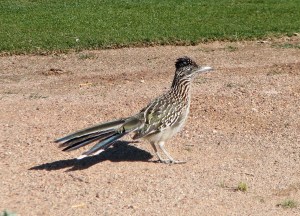
We are meeting one of the coolest birds in the southwest today- the greater roadrunner! Luckily this one didn’t have a coyote chasing it!

897872ED-5657-4BBD-B6CB-685B1DCAEBE3

Greater Roadrunner Fun Facts: 

  • Roadrunners have X shaped feet. The Pueblo people consider this shape sacred as it is thought to ward off evil spirits.
  • They are carnivores. They spent most of our time on the ground hunting small mammals, reptiles and toads.
  • These fierce predators slam their prey against rocks. They are also known for their ability to kill rattlesnakes, scorpions and venomous lizards.
  • Roadrunners can reach speeds of up to 20 mph.
  • They have a special gland by their eye to help excrete excess salt!
  • Roadrunners are territorial.
  • They are not good fliers.

8A15DF21-A884-42D4-B84A-9ABE0C9B87FA

These funny looking birds are suited for the terrestrial habitat. Those fast feet give them an advantage in finding food and staying away from predators. Once only found in the southwest, these birds are moving east can be found as far as Louisiana now.

Categories: adventure, Animals, birds, Children, conservation, education, Environment, nature, science, Today's Post, wildlife | Tags: , , , , , , , , , , , | 1 Comment

Back to Basics- Birds

Back to Basics- Birds

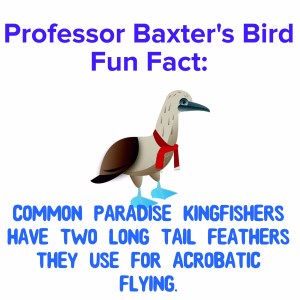
Our professor of birds is Professor Baxter and he is a Blue footed Booby! He’s going to share some basics about about birds!

ellie_edmund_professors-bfbooby

There are around 9,000 species of birds in the world. We are in every habitat on earth. Because we are so adaptable, we are considered the most successful animal on the planet. The earliest birds were descendants of the dinosaurs. Fossils of my long lost relatives have been found that are 150 million years old.

 first bird

What makes a bird a bird?

  • We have feathers. Our feathers are made from keratin.
  • We are endothermic (warm blooded).
  • We lay eggs.
  • We are vertebrates.
  • We have hollow bones. This helps us fly.
  • We have no teeth.

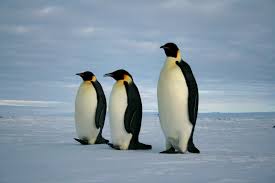
Feathers are our most distinctive feature. Feathers are made of keratin (the same protein that makes up human hair and nails). We have flight feathers on our wings. We have down feathers close to our body to keep us warm. Our tail feathers are made to help us fly. We must preen (clean) our feathers to keep them healthy. There are some birds who cannot fly including; kiwi, kakapo (the heaviest parrot on earth), penguins and ostrich.

kakapo

peguin

Our beaks/bills are also covered in keratin and they are shaped for what type of food we eat.

Instead of paws, we have feet. Our feet have 2 to 4 toes. Most of us have 4 toes, 3 that face forward and one that faces backward. This is perfect for sitting on tree branches. Those birds that spend time in water have webbed feet.
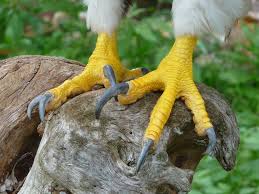
bird feet

We must keep our body temperature at 104 degrees. It is important that we control our heat loss.

Lastly, we lay eggs. Our mating rituals include dancing, songs and plumage displays. Our eggs are made of calcium carbonate. We lay eggs in nests, on rocks, on the beach and even on the ground. Some of us are born without feathers and our eyes closed. Some of us are, like ducks, are born with down feathers and our eyes open.

duck


Categories: adventure, Animals, birds, Children, conservation, education, Environment, nature, science, Today's Post, wildlife | Tags: , , , , , , , , , , | 1 Comment

Pelican! Pelican!

Pelican! Pelican!

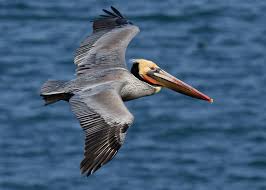
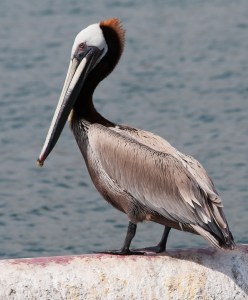
We are meeting one last animal at Camp E&E! The summer has flown by hasn’t it? We can hardly believe it! We could spend hours and hours watching the brown pelican take diving in the ocean scooping up eats! Let’s mee them today!

IMG_0337


Brown Pelcian Fun Facts: 

  • The Brown Pelican is the smallest of all pelican species.
  • They are plunge divers. They fly above the surface of the water and then drop or plunge into the sea to catch their prey.
  • Brown pelicans have a greenish skin on their face that is brighter during mating season.
  • Brown pelicans like to nest in trees, shrubs and mangroves.
  • Both parents incubate eggs. They usually have 2-3 chicks. One chick can eat up to 150 lbs of food by the time they are 10 months old! That’s a bunch of fish for little guys
  • Their pouch can hold up to 3 gallons and the stomach can hold around 1 gallon.
  • Brown pelicans are the state bird of Louisiana.

IMG_0339

We love pelicans! Love them! They are one of the coolest birds around! Do you love them as much as us? Stick around for the last craft day of camp tomorrow!

Categories: adventure, Animals, birds, camp, Children, conservation, education, Environment, nature, oceans, science, Today's Post, wildlife | Tags: , , , , , , , , , , , | 1 Comment

Catching Oysters with an Oystercatcher

Catching Oysters with an Oystercatcher

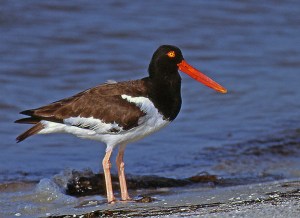
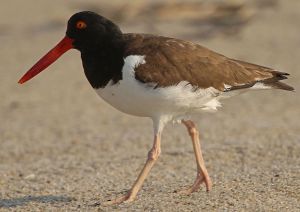
It’s the last week of Camp E&E by the Sea! Can you believe it? This week we’re hanging by the beach to meet shore birds. First up is the American Oystercatcher! This neat bird is easy to spot with its bright orange beak. So let’s head out to spot some campers!

IMG_0334

American Oystercatcher Fun Facts: 

  • These brightly colored birds call salt marshes and shores their home.
  • They feed on shellfish, mussels, clams, oysters and sea stars.
  • American oystercatchers tend to spend more time on the ground than flying.
  • They often grab the shellfish inside the shell before it can close. They severe the muscle and swallow the meat whole.
  • They nest in higher areas away from the high tide line.

IMG_0335

We could sit on the beach and watch shore birds all day! These funny birds with their long legs are one of our favorites. What’s your favorite shorebird?

Categories: adventure, Animals, birds, camp, Children, conservation, education, Environment, nature, oceans, science, Today's Post, wildlife | Tags: , , , , , , , , , , | 3 Comments

Whooooo is that in the Woods?

Whooooo is that in the Woods?

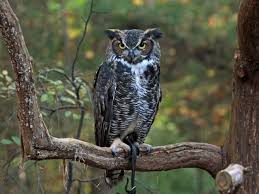
We are meeting one last animal here at camp at Lake Salamander. Next month we head to Camp E&E by the Sea! This month has just flown by way too fast too! Maybe we’ll come back for a few weeks in August before school starts! The animals we are meeting tonight, is a big bird and one of course that prefers the night! Let’s hope the Great Horned Owl sings tonight!

gho2

Great Horned Owl Fun Facts:

  • Great horned owls have those two fabulous tufts on their heads. Those are not its ears. They are thought to help with camouflage or identify individuals.
  • Their ears are actually on their facial disk and are not symmetrical. The right one is higher than the left. This gives them super hearing and enables them to locate prey that is moving and not in sight!
  • They can catch prey that is larger than themselves, as well as prey as small as scorpions.
  • Great horned owls have powerful talons. They use them to snap the spine of their prey.
  • Females are larger than males.
  • Crows are not the great horned owl’s friend. The owl’s are their top predator, so crows are known to harass them.

gho

We could sit out here all night and listen to these great and powerful predators call to each other. Just give a listen here!

Categories: adventure, Animals, birds, camp, Children, conservation, education, Environment, nature, science, Today's Post, wildlife | Tags: , , , , , , , , , | 1 Comment

Whoooooo’s Crafty?

Whoooooo’s Crafty?

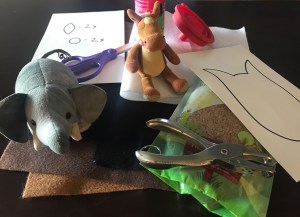
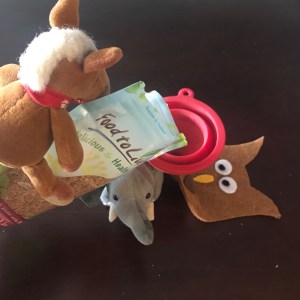
We’re in the craft cabin today to make stuffed owls! Whooooo is excited as we are? Woohoot! Hehehe! Let’s get started!

Materials:

FullSizeRender(1)

  • Felt in browns, black, white & yellow (color not shown)
  • Scissors
  • Felt glue or hot glue (not shown)
  • Hole punch
  • Whole flax seed or stuffing (not shown)
  • Funnel
  • Pattern

Instructions:

  • Cut out all your pieces. Make sure to cut two owls!IMG_4811
  • Use a hole punch to make the irises for your owl’s eye.

IMG_4812(1)

  • Place all the pieces together. We free hand cut a beak.
  • Glue to body parts to the one piece of your owl.

IMG_4813

  • Glue the two bodies together- leaving a small opening at the bottom. If you are using felt glue, let your owl dry before filling it.

IMG_4814

  • Use the funnel to fill your with flax seed. If you do not have a funnel- you can make a cone from paper that will work! If you are using stuffing- just stuff it in with a chopstick.

FullSizeRender(2)

  • Glue the bottom opening together! Don’t want your owl to lose stuffing.
  • Then enjoy hanging out with your stuffed owl!

IMG_4820

Categories: adventure, Animals, birds, camp, Children, conservation, crafts, education, Environment, nature, owls, science, Today's Post, wildlife | Tags: , , , , , , , , , , | 1 Comment

King Bird in Paradise

King Bird in Paradise

We decided to do some bird watching while we were on land. There are so many amazing birds here and it was hard to pick a favorite. But we did love the Paradise Kingfisher with it’s long tail and bright blue colors.

kingfisher2

IMG_4046


Date: 5/11

Location: Raja Ampat Islands

Paradise Kingfisher Fun Facts:

  • A pair of kingfishers in highly territorial.
  • They make their nests out of termite mounds on trees. IMG_4047
  • Paradise kingfishers do not migrate.
  • Both parents care for the chicks.

kingfisher

These adorable birds are just one of the island inhabitants we enjoyed meeting! We head back to the boat and the coral reef next week to meet more ocean dwellers!

Categories: adventure, Animals, birds, Children, conservation, education, Environment, nature, science, Today's Post, wildlife | Tags: , , , , , , , , , | 1 Comment

We Call Fowl!

We Call Fowl!

We met our last animal of our visit to the Great Victorian Desert! We will be heading to the coral reefs of the Raja Ampat Islands for the last month of the school year! We can hardly wait! And then- we head off to Camp E & E for the summer- where you are all invited!

malleefowl

IMG_3828


Date: 4/27

Location: Great Victorian Desert

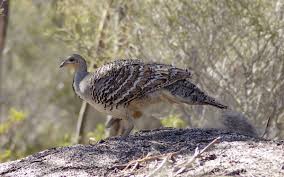
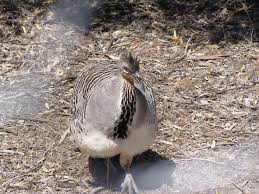
Malleefowl Fun Facts:

  • Malleefowl tend to stay on the ground. They only fly when threatened.
  • They are distantly related to chickens.
  • Malleefowl are mostly solitary.
  • Malleefowl can also freeze when they spot a predator, causing them to blend in with their surroundings.
  • Males build large nest mounds on the ground. The building is complicated and it done so the eggs are kept at a constant temperature.
  • Chicks are born in their underground nest and must dig their way out when they hatch. It can take 2-15 hours for the chick to reach the surface.
  • Chicks tend to hatch one at a time and then they do not interact with the adults or their siblings.

IMG_3829

We spotted a few of these stout birds and they do indeed stop motionless when they see you! It’s amazing that the little chicks have to survive with no parental help or care!

malleefowl2

Categories: Animals, birds, Children, conservation, education, Environment, nature, science, Today's Post, wildlife | Tags: , , , , , , , , , , | 1 Comment

Blog at WordPress.com.