Posts Tagged With: education blog

What’s a Bibly?

What’s a Bibly?

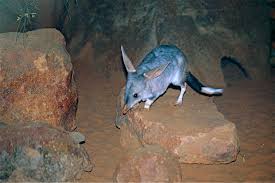
We headed out to find one of Australia’s neatest little animals! These crazy looking marsupials are so cool and we couldn’t believe we met one! Are you ready to meet them too?

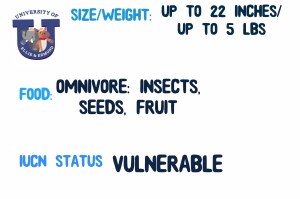
bilby3

IMG_3826


Date: 4/26

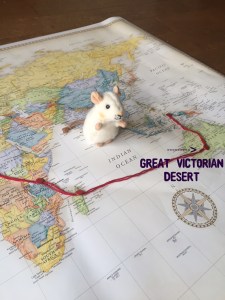
Location: Great Victorian Desert

Greater Bibly Fun Facts:

  • Greater biblies are also known as bandicoots.
  • Bilbies have long snouts, large ears, back legs like a kangaroo and black & white tails! In other words- they are crazy looking!
  • They are nocturnal.

IMG_3827

  • Greater biblies are mostly solitary.
  • Their pouches face backward to keep dirt out of it.
  • Greater bilbies do not drink water, they get all the moisture they need from the food they eat.
bilby2

bilby


Bilbies are neat little critters! They are listed as vulnerable though. Again, their populations have dropped from predation from animals such as fox and feral cats. There are great conservation efforts happening to reintroduce bilbies in habitats where they were once gone.

Categories: adventure, Animals, Children, conservation, endangered species, Environment, marsupial, nature, science, Today's Post, wildlife | Tags: , , , , , , , , , | 1 Comment

The Parrot with a Crown!

The Parrot with a Crown!

We met a feathered friend in the outback! This shy green bird is not always easy to spot, but we were lucky!

princess parrot2

IMG_3813


Date: 2/25

Location: Great Victorian Desert

Princess Parrot Fun Facts:

  • Princess parrots were named after Princess Alexandra of Denmark.
  • They are quiet colorful, with bluish heads, pink throats and blue tails.
  • Males have longer tails and brighter colors than females.

IMG_3814

  • They make loud calls.
  • Princes parrots are known to live around 30 years.

princess parrot

We were so excited to find a few of these chatty little birds! They tend to gather in a group for mating and then disappear again!

Categories: adventure, Animals, birds, Children, conservation, education, endangered species, Environment, nature, science, Today's Post, wildlife | Tags: , , , , , , , , , | 1 Comment

Hello Wallaby!

Hello Wallaby!

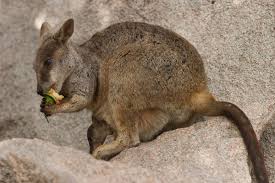
We met one of the cutest inhabitants of the desert today! These hopping marsupials are so fun! Let’s learn more about the Brush-tailed rock wallaby!

rock wallaby

IMG_3811


Date: 4/24

Location: Great Victorian Desert

Brush-tailed Rock Wallaby Fun Facts:

  • Brush-tailed Rock Wallabies have rough padded feet to help them get around the rocky terrain.
  • They live in groups where each animal has their own territory. One male’s territory overlaps several female’s territory.
  • Brush-tailed rock wallabies are crepuscular (active at dawn & dusk).

IMG_3812

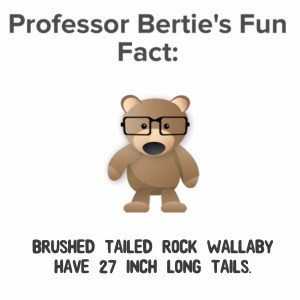
  • Those long tails help them balance on the rocky habitats.
  • They find shelter in caves or rocky crevices.

rock wallaby2

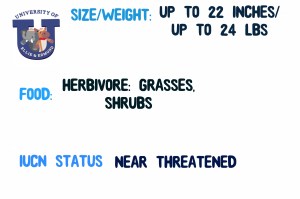
Rock wallaby’s are just the cutest! They are threatened due to habitat lose and the introduction of the non-native red fox. Ecosystems are very delicate and invasive species can quickly destroy it.

Categories: adventure, Animals, Children, conservation, education, endangered species, Environment, nature, science, Today's Post, wildlife | Tags: , , , , , , , , , , | 1 Comment

Monitoring a Monitor!

Monitoring a Monitor!

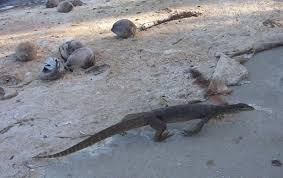
We went looking for a medium sized reptile today! We found this gorgeous animal and it was so fun to watch!

sand monitor

IMG_3689


Date: 4/19

Location: Great Victorian Desert

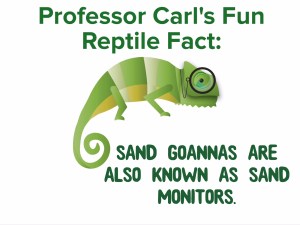
Sand Goanna Fun Facts:

  • Sand goannas are members of the monitor family.

IMG_3690

  • Sand goannas are burrows. They dig burrows for shelter.
  • They are diurnal (active during the day).
  • They have forked tongues to help them “smell” the air.
  • Sand goannas sense of smell is so good they can find buried prey.
  • Sand goannas lay their eggs in a termite mound. The termites keep the eggs warm.

sand monitor2

These monitors are so cool to watch! Other members of the monitor family include the famous Komodo dragon!

Categories: adventure, Animals, Children, conservation, education, endangered species, nature, reptiles, science, Today's Post, wildlife | Tags: , , , , , , , , , | 1 Comment

Give That Frog a Glass of Water

Give That Frog a Glass of Water

We had no internet yesterday! Darn-it! Well we spent that extra time looking for an unusual amphibian who calls the desert home! The water holding frog is soooo cool!

water holding frog

IMG_3395


Date: 4/7

Location: Great Victorian Desert

Water Holding Frog Fun Facts:

  • They have webbed toes.
  • Water holding frogs live underground.

IMG_3396

  • When they bury themselves, they cocoon themselves in a mucus to protect themselves.
  • Water holding frogs eat that mucus when they emerge from their dormant state.
  • Water holding frogs can hold water in their bladder and send it back to their mouths to drink. They can also store in pockets under their skin!
  • They come out of their sandy burrows to mate during rainy season.

Woohoo! Animals have the neatest adaptation ever! Even if they seem kind of gross! Hehehehe!

Categories: adventure, amphibians, Animals, Children, conservation, education, Environment, nature, science, Today's Post, wildlife | Tags: , , , , , , , , , , | 1 Comment

Tiny Marsupial

Tiny Marsupial

Well it doesn’t get much cuter than today’s animal! These tiny marsupials look like rodents, but they are not!

sandhill dunnart2

IMG_3325


Date : 4/5

Location: Great Victorian Desert

Sandhill Dunnart Fun Facts:

  • They are one of the largest members of the Dunnart family.
  • Sandhill dunnart have stiff black hairs on the underside of the tail.
  • These little marsupials are carnivores!
  • Their tails are longer then their bodies.

IMG_3352

  • They live in burrows under the spinifex hummocks shrubs.
  • Sandhill dunnarts store fat in their tails.

sandhill dunnart

These little marsupials are threatened unfortunately. There are efforts in Australian zoos to increase their numbers! Woohoo!

Categories: adventure, Animals, Children, conservation, education, endangered species, Environment, marsupial, nature, science, Today's Post, wildlife | Tags: , , , , , , , , , , , | 1 Comment

Desert Down Under

Desert Down Under

We have backed our bags again and headed off to the great island nation of Australia! It is a long way from HQs. We unpacked at camp just at the edge of the Great Victorian Desert. After getting over our jet lag. We set out to learn more about this vast and interesting habitat!

IMG_3317

Great Victorian Desert Fun Facts:

  • It is the largest desert in Australia.  It’s about 135,000 square miles.
  • It is located in the Southwest of Australia.
  • Temps can range from 104 degree Fahrenheit in summer to 64 in the winter.
  • The Mamungari Conservation Park lies within the Great Victorian Desert.

e e desert

  • Only very hard plants survive in the desert, but there is a great variety of plants.
  • There is quiet a variety of animals in the desert that are adapted to live in the harsh environment!

great victorian desert

We are super excited to meet some of the inhabitants of this great desert! We’ll be meeting an interesting lizard tomorrow! See you then!


Categories: adventure, Animals, Children, conservation, education, Environment, nature, science, Today's Post, wildlife | Tags: , , , , , , , , , | 1 Comment

Civet Civet

Civet Civet!

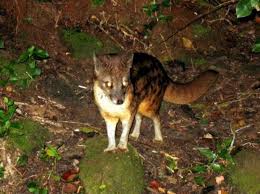
We spent the last nights of our adventure here in Madagascar looking for some really neat nocturnal animals! (And for those who asked- we are working on a glossary.)  We found the first of our discoveries on the forest floor looking for eats. This strange animal is so cool! We could hardly contain our excitement when we spotted it!

malagasy civet

IMG_3211


Date: 3/29

Location: Madagascar forest

Malagasy Civet Fun Facts:

  • Malagasy civets are shy animals.
  • They can be territorial. They scent mark their territories.
  • Malagasy civets are very vocal. They make a series of noises including grunts.
  • They spend their days asleep in trees and crevices.

IMG_3200

  • They are related to mongooses and fossa.
  • Malagasy civets are the second largest natural predator on Madagascar- the fossa is the largest.

malagasy civet2

We love these unusual little animals. They remind of us a raccoon and a fox put together! What do you think?

Categories: adventure, Animals, Children, conservation, education, endangered species, mammals, nature, science, Today's Post, wildlife | Tags: , , , , , , , , , | 2 Comments

Hello Little Tenrec!

Hello Little Tenrec!

We spent our last day of the week in search of a very small mammal that looks like a hedgehog, but it’s not. The tenrec is found only in Madagascar and while they are similar they are not hedgehog relatives.

common tenrec

IMG_2892


Date: 3/16

Location: Madasgascar

Common Tenrec Fun Facts:

  • They are also known as the tailess tenrec. They are the largest tenrec species.
  • Common tenrecs do have a tail- up to 1 1/2 cm in length.
  • Tenrecs are related is not related to hedgehogs. It is thought that is related to elephants, aardvarks and manatees.
  • Tenrecs roll in a ball and have spines similar to hedgehogs, but they do not have the same strong muscle structure of a hedgehog.

IMG_2893

  • Tenrecs roll in sand to help them keep clean.
  • They can have up 32 babies at at time. All of the babies are born without spines.

common tenrec2

We love hedgehogs and their non cousin the tenrec! Can you believe that they might be related to Ellie? Who doesn’t love those cute little feet and funny ears!


Categories: adventure, Animals, Children, conservation, education, Environment, mammals, nature, science, Today's Post, wildlife | Tags: , , , , , , , , , , , | 1 Comment

Aye-Aye Captain!

Aye-Aye Captain!

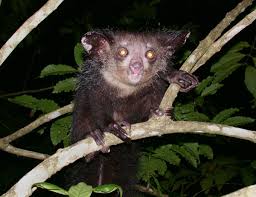
We slept all day after looking for frogs the night before! Our next adventure was at night too. We went looking for a shy and elusive primate that doesn’t look like a primate at all!

aye aye

IMG_2874


Date: 3/14

Location:  Madagascar

Aye-Aye Fun Facts:

  • Aye-aye’s are the largest nocturnal primate in the world.
  • They are members of the prosimian family, which includes lemurs.
  • They have one long stick like finger they use to grab grubs out of trees. They also use it to tap on trees and listen for bug tunnels!
  • Aye-aye’s are arboreal and rarely if never come to the ground.

IMG_2875

  • Aye-aye’s have long bushy tails to help them navigate their tree homes. In fact they have the longest tail of any prosimian!
  • They sleep during the day in nests of twigs. They rotate nests.
  • Aye-aye’s are solitary. They mark their territory with scent glands in their faces, necks and bums.

aye aye2

These wild and weird animals are alien looking! When scientists first discovered them they thought they were rodents! Nope- they are primates- related to apes, monkeys and lemurs. Who knew? The world’s rainforests are full such amazing creatures!

Categories: adventure, Animals, Children, conservation, endangered species, Environment, mammals, nature, science, Today's Post, Uncategorized, wildlife | Tags: , , , , , , , , , , , , | 1 Comment

Blog at WordPress.com.