Posts Tagged With: endangered species

Tiny Marsupial

Tiny Marsupial

Well it doesn’t get much cuter than today’s animal! These tiny marsupials look like rodents, but they are not!

sandhill dunnart2

IMG_3325


Date : 4/5

Location: Great Victorian Desert

Sandhill Dunnart Fun Facts:

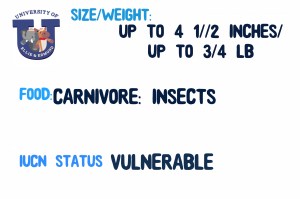
  • They are one of the largest members of the Dunnart family.
  • Sandhill dunnart have stiff black hairs on the underside of the tail.
  • These little marsupials are carnivores!
  • Their tails are longer then their bodies.

IMG_3352

  • They live in burrows under the spinifex hummocks shrubs.
  • Sandhill dunnarts store fat in their tails.

sandhill dunnart

These little marsupials are threatened unfortunately. There are efforts in Australian zoos to increase their numbers! Woohoo!

Categories: adventure, Animals, Children, conservation, education, endangered species, Environment, marsupial, nature, science, Today's Post, wildlife | Tags: , , , , , , , , , , , | 1 Comment

A Skink not a Skunk!
A Skink not a Skunk!

After we settled in at camp we decided where we should go on our first adventure! We wanted to meet a neat little lizard we knew lived in this habitat! We headed off for the day with our day packs full of snacks and MUD SPF 30 sunscreen!

great desert skink

IMG_3315


Date: 4/3

Location: Great Victorian Desert

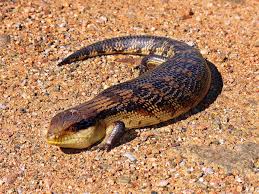
Great Desert Skink Fun Facts:

  • Great desert skinks vary in color from tan to grey or dark brown.
  • They store fat in their tales during the winter.
  • Males are slightly larger than females.
  • Great desert skinks live in complex burrows with several entrances and areas.

IMG_3316

  • A family group occupies the burrow. Babies stay with their family for up to three years.
  • They generally hunt at night in the hotter months.

great desert skink2

We had such fun going to look for these little short legged lizards! They remind us of another Australian skink- the blue tongued skink! They are both so cool! And they aren’t slimy at all- very smooth!

Categories: adventure, Animals, Children, conservation, education, endangered species, Environment, nature, reptiles, Today's Post, wildlife | Tags: , , , , , , , , , , | 1 Comment

Aye-Aye Captain!

Aye-Aye Captain!

We slept all day after looking for frogs the night before! Our next adventure was at night too. We went looking for a shy and elusive primate that doesn’t look like a primate at all!

aye aye

IMG_2874


Date: 3/14

Location:  Madagascar

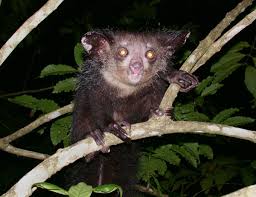
Aye-Aye Fun Facts:

  • Aye-aye’s are the largest nocturnal primate in the world.
  • They are members of the prosimian family, which includes lemurs.
  • They have one long stick like finger they use to grab grubs out of trees. They also use it to tap on trees and listen for bug tunnels!
  • Aye-aye’s are arboreal and rarely if never come to the ground.

IMG_2875

  • Aye-aye’s have long bushy tails to help them navigate their tree homes. In fact they have the longest tail of any prosimian!
  • They sleep during the day in nests of twigs. They rotate nests.
  • Aye-aye’s are solitary. They mark their territory with scent glands in their faces, necks and bums.

aye aye2

These wild and weird animals are alien looking! When scientists first discovered them they thought they were rodents! Nope- they are primates- related to apes, monkeys and lemurs. Who knew? The world’s rainforests are full such amazing creatures!

Categories: adventure, Animals, Children, conservation, endangered species, Environment, mammals, nature, science, Today's Post, Uncategorized, wildlife | Tags: , , , , , , , , , , , , | 1 Comment

Don’t Eat That Tomato

Don’t Eat That Tomato

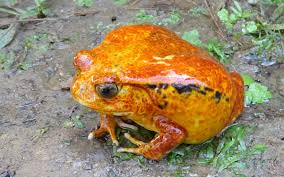
We went exploring in the forest last night. We were looking for a brightly colored frog. It’s been a while since we went on the hunt for amphibians, so it was a treat to find these guys. They weren’t hard to find, since it’s still frog breeding season and these little chippers are loud!

tomato frog2

IMG_2872


Date: 3/13

Location: Madagascar

Tomato Frog Fun Facts:

  • Tomato frogs are bright orange or red.
  • They are brightly colored to warn predators that they are toxic. They secrete a white substance that acts like a glue.
  • Tomato frogs can also inflate when threatened.
  • They are ambush predators.

IMG_2872

  • Tomato frog tadpoles are only 6 millimeters long when born!
  • Tomato frogs can live up to 8 years.

tomato frog3

tomato frog


Tomato frogs are near threatened due to habitat loss and collection of frogs for the pet trade. While frogs make neat pets, it is best to get one from a breeder. Taking animals from the wild damages delicate ecosystems. Keep these tomatoes in the forest.


Categories: adventure, amphibians, Animals, Children, conservation, education, endangered species, frogs, nature, science, Today's Post, wildlife | Tags: , , , , , , , , , , , | 1 Comment

A Large Island Off The Coast Of Africa

A Large Island Off The Coast Of Africa

img_2756

We’re back from our vacation and we’re packed up and heading to the large island nation off the east coast of Africa- Madagascar. We are so excited to explore this neat island!

madagascar2

We have some fun facts about Madagascar for you!

  • Madagascar is the only home to lemurs. In fact 70% of the wildlife species in Madagascar are only found there.
  • It is the fourth largest island on earth.
  • Two-thirds of all the chameleon species on earth call Madagascar home.
  • The island is one of the biggest producers of vanilla.
  • It has everything from mountains to coasts.
  • Madagascar split from the Indian sub-continent around 88 million years ago.
  • There are two official languages in Madagascar- French & Malagasy.

madagascar3

We can hardly wait to explore the habitats of this large island. We plan to meet the island’s most famous residents- the lemur; along with reptiles and other interesting characters like the fossa! We’ll see you tomorrow with our newest animal friend!

Categories: Animals, Children, conservation, education, endangered species, nature, science, Today's Post, wildlife | Tags: , , , , , , , , , | Leave a comment

Dogs in Africa

Dogs in Africa

We spent our day watching a pack of wild dogs. These amazing canines are so fascinating. Let’s learn more about them!


wild-dog4


img_2094


Date: 2/7

Location: Serengeti

African Wild Dog Fun Facts:

  • African wild dogs’ name in Latin means painted wolf.
  • They are highly social. They live in a pack with a dominate breeding pair.
  • African wild dogs hunt in packs.
  • They can reach speeds of up to 35 mph. They generally can not outrun a prey animals, but instead can wear it out.

img_2095

  • Females are the ones who leave the pack when they are mature adults.
  • The entire pack eats together with no show of aggression to each other.
  • The pack also helps raise the pups.

wild-dog3

wild-dog


These gorgeous canines need a large territory. Unfortunately as their habitat disappears, so do the dogs. Many zoos in the US are working with partners in Africa to make sure these dogs are around for future generations.

Categories: adventure, Animals, Children, conservation, education, endangered species, Environment, mammals, nature, science, Today's Post, wildlife | Tags: , , , , , , , , , | 1 Comment

Howdy Otter!

Howdy Otter!

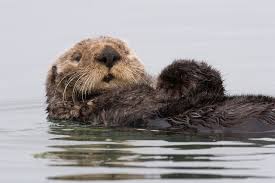
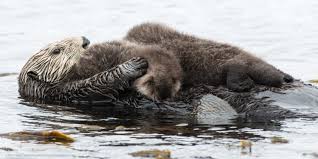
We spent our day on a boat going around the bay. We spotted several otters swimming, eating and snoozing! What a treat!

otter3

img_1312


  • Sea Otters are members of the weasel family.
  • Sea Otters live in the Pacific ocean along the North American shore and the Northern Asian shore.
  • Sea Otters spend most of their time in water. They will occasionally come ashore to rest.
  • Sea Otters’ fur is water repellent and very thick.

img_1372


  • Sea Otters role in order to trap air bubbles in their fur. The air bubbles help keep them warm.
  • Sea Otters are often found floating on the surface of kelp forests. They will even wrap the kelp around themselves to keep anchored while sleeping
  • Sea Otters groom themselves constantly. This helps keep their fur clean and waterproof.
  • Sea Otters use rocks to break some of their prey, including crabs and sea urchins.


otter2

otter


Sea Otters help keep the balance in a kelp forest. One of their favorite prey, sea urchins eat kelp; and without the otters to keep the urchin population in check, the kelp would be gone. We had such a great time watching these furry critters. It never gets old seeing otters in the wild!


Categories: adventure, Animals, Children, conservation, education, endangered species, mammals, oceans, science, Today's Post, wildlife | Tags: , , , , , , | 1 Comment

Unicorns of the Sea!

Unicorns of the Sea!

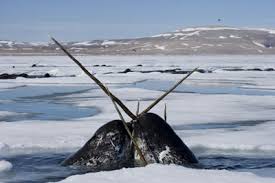
We couldn’t resist to make one last stop in our trip to the Arctic Circle to see some narwhals! They are one of our favorites- we even have two narwhals living at HQs! We had a great time on the SS Ellie and Edmond boat watching these unicorns of the sea!

narwhalimg_0893


ellie_edmund_professors-bear


Date: 12/20

Location: arctic circle

  • The Narwhal is often called the unicorn of the sea.
  • They have the most northerly range of any mammal on the planet.
  • Narwhals have a modified upper incisor tooth that grows up to 9ft long.
  • This tooth looks like a horn. It grows through the upper mouth and is seen mostly in male Narwhals, but females can have small tusks.  Scientists aren’t completely sure what the purpose of the tusk is, but think it might be for attracting females.
  • The long tusk is made of ivory, just like an elephants tusks!

img_08941

  • Narwhals have a thick layer of blubber, like other arctic animals that help keep them warm in the cold water.
  • Narwhals swim in groups called pods. Pods can include as many as 1000 individuals.
  • Narwhals are very communicative and use a wide range sounds, including clicks and whistles.
  • They suck food through their powerful lips and tongue.

narwhalnarwhal2


Narwhals are amazing animals! They survive in very cold waters and grow this awesome long tusk that makes them look unique!  If you could pick a crazy adaptation like tusks what would it be?


Categories: adventure, Animals, Children, conservation, education, Environment, mammals, nature, science, Today's Post, wildlife | Tags: , , , , , , , , , , , | Leave a comment

Arctic Shark

Arctic Shark

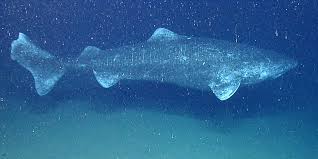
We boarded the E&E submarine to meet our last animal this week- the Greenland shark. We spotted one of these elusive and majestic in the cold waters of the north Atlantic ocean. It was a big thrill!

greenland-sharkimg_0735


ellie_edmund_professors-seahorse(1)


Date: 12/15

Location: North Atlantic

  • Greenland sharks are members of the sleeper shark family.
  • Females are larger than males.
  • Greenland sharks’ upper teeth lack the serration that most shark teeth have. It is the lower teeth that do most of the work.
  • Not much was known about these sharks before the 1930s.

img_0737

  • Greenland sharks only grow about 1 cm a year.
  • These sharks are very slow swimmers and have slow metabolisms. These adaptations help them survive in extremely low temperatures.
  • Greenland sharks will migrate to warmer waters in winter, when they do so they will do to deeper depths.
  • They are the only true arctic dwelling shark.
  • Most Greenland sharks have parasitic copepods attached to their eyes that render them blind.
  • Their flesh is extremely toxic.

We have a great time in the E&E sub on the search for these amazing creatures. Most other sharks could not survive in the temps that Greenland sharks do. Nature continually amazes us; just when you think nothing could live there in that harsh environment- we are proved wrong! Neat!

Categories: adventure, Animals, Children, conservation, education, Environment, nature, science, Today's Post, wildlife | Tags: , , , , , , , , , , | Leave a comment

We are the Walrus

We are the Walrus

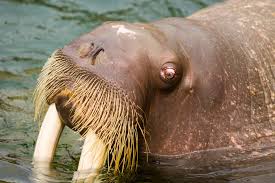
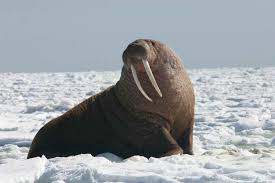
We’re off to the Pacific ocean in Northern Canada to meet the gregarious, fat and funny walrus. We love these giant marine mammals and we couldn’t have been more excited to see them again! We made sure to bundle up before making our way over on the ice!

walrusimg_0730

ellie_edmund_professors-bear

Date: 12/12

Location: Arctic circle

  • Walrus eat prey off the bottom of the oceans and use suction to eat.
  • They can stay underwater for up to 25 minutes and can dive down to 330ft deep.
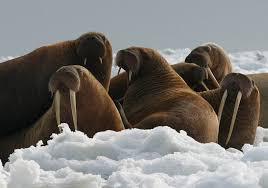
  • They are highly social and often are seen in large groups, called herds.
  • Male walruses are twice the size of females.
  • They have rough wrinkly skin and very whiskery faces.
  • A walrus’ skin can be up to 4″ thick.


  • Walruses have tusks of ivory. They can grow up to 3 ft 3” long.
  • Walrus babies can weigh up to 174lbs when born.
  • Like seals, they lack external ears.

walrus2walrus3

Those magnificent tusks always remind Ellie of her tusks. These social animals always make us laugh with their grunting and barking sounds. We can’t even handle how they get around- so funny!

Categories: adventure, Animals, Children, conservation, education, Environment, mammals, nature, science, Today's Post, wildlife | Tags: , , , , , , , , , , | Leave a comment

Blog at WordPress.com.