Animals

Birding Fun

Birding Fun!

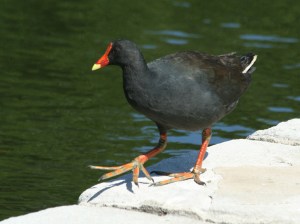
We slept in after our big snorkeling trip yesterday! We hoped a plane to the island of O‘ahu for a few days in the late morning. We were on a mission to find one of Hawaii’s native birds in the wetlands! We were super lucky to spot some! Come learn about them with us!
59F6E868-22A6-4250-8599-99E3DAACE257

Hawaiian Gallinule Fun Facts: 

  • Hawaiian Gallinule are also known as the Hawaiian moorhen.
  • They can grow up to 12 inches long and weigh up 3/4 lbs.
  • They are omnivores. They eat grass, algae and insects.
  • These wetland birds do not have webbed feet. They are excellent swimmers though.
  • They molt once a year in the summer. The molt takes 25 days or so.
  • Hawaiian gallinule are known to be very secretive.
  • Nesting parents are very territorial. They both help incubate the eggs and protect the young chicks.
  • They are listed as Endangered by the IUCN.

0962979D-C220-4006-B1E7-3BC7457AA0D5

It was neat to see these shy water loving birds. We love their funny long legs and feet!

Categories: adventure, Animals, birds, Children, conservation, education, endangered species, Environment, nature, science, Today's Post, wildlife | Tags: , , , , , , , , , , , | 1 Comment

Swimming with Greens

Snorkeling with Greens

We decided to go snorkeling for our first time in Hawaii. The water is so gorgeous and inviting. We were excited to see what animals we would find! And wow- we met some green sea turtles grazing in the shallows!

EC9627EB-BC7C-45DD-A1A5-276328059D02

Green Sea Turtle Fun Facts: 

  • Green Sea Turtles have a smooth carapace.
  • They can grow up to 5 ft long and weigh up to 600 lbs.
  • The carapace (top shell) is a brown-olive color.
  • Green sea turtles have small heads, but strong flippers.
  • They are the only sea turtle that can be seen occasionally sunbathing on the beach.
  • Green sea turtles lay eggs on the beach.
  • They are herbivores. They eat sea grass, roots and algae. Young turtles are known to eat crabs and jellies.
  • They are listed as Endangered by IUCN.

C4275114-7C8C-4332-93C6-0EC165D0F670

We enjoyed seeing these majestic reptiles in the oceans. Green sea turtles get their name from their greenish skin color. It was so excited to snorkel with these sea turtles. They are known to come ashore and sun themselves on certain beaches around Hawaii- if you visit- wave quietly and from a distance!

Categories: adventure, Animals, Children, conservation, education, endangered species, Environment, nature, oceans, reptiles, Today's Post, wildlife | Tags: , , , , , , , , , , , | 1 Comment

Greenhouse frog

Greenhouse Frog!

We headed out today away from the beach and in to the forest to find a little frog who is not native to Hawaii but was introduced from Cuba. These little amphibians are not east to find, but we were lucky and discovered a few.

879A7C15-89B6-485A-ABBE-BEDD7DCF4AE0


Greenhouse Frog: 

  • These little frogs are only about an inch long.
  • They are carnivores. They eat ants, mites and spiders.
  • They lay their eggs in a membrane casing that the leave under logs or leaves.
  • They pass through their tadpole stage while in their eggs. When they are born they are frogs.
  • Their eyes are red.

FF27565F-8935-42AD-B767-0223FD6D8D1E

These little frogs are so cute! But then again, aren’t they all!

Categories: adventure, amphibians, Animals, Children, conservation, education, Environment, frogs, nature, science, Today's Post, wildlife | Tags: , , , , , , , , | 1 Comment

Noddy bird not a Noodle bird

Noddy bird not a Noodle bird

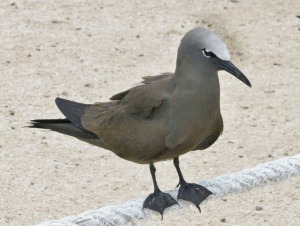
We are meeting our first animal here in Hawaii. We headed to the beach to meet this shore bird. Come join us on the sand!

598F38D5-B8C6-4440-8EAA-E2F9DA7ACBD2

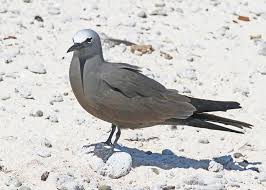
Brown Noddy Fun Facts: 

  • These 18 inch birds are related to gulls and terns.
  • They are the largest member of the noddies.
  • They are carnivores. They nab fish from the ocean as they fly above it.
  • Brown noddies nest together in large colonies.
  • Males and females have a courtship ritual that includes bowing to each other and flying together.
  •  Both parents incubate the eggs and help raise the chicks.
  • They are listed as Least Concern by the IUCN.


5F217BC1-7C2D-435F-A79E-742955A0903E

It was fun to watch these birds around the beach. We had never heard of the noddy bird, but it makes sense that they are related to seagulls!

Categories: adventure, Animals, birds, Children, conservation, education, Environment, nature, oceans, science, Today's Post, wildlife | Tags: , , , , , , , , | 1 Comment

Hawaii!!

Hawaii!

Hellooooo!! We’ve made it to the lovely islands of Hawaii! Now while it would be fun to sit on the beach drinking straight from a coconut, this horse and elephant have animals to meet and habitats to explore! Let’s get started by learning more about this amazing place!

9DE2C8F6-CA4A-4657-A5C8-BC6D1C31968A

Hawaii Fun Facts: 

  • Hawaii is the world’s longest archipelago (a group of islands). It has 132 islands. Eight of those make up the main inhabitated islands.
  • The Big Island has the most land space.
  • Hawaii has many awesome features, including the world’s most active volcano. Kilauea (the volcano’s name) is on the big island. It has been spewing lava for the last 30 years.
  • Mauna Kea is a dormant volcano on the Big Island. It is twice the size of Mt Everest! Most of it is underwater though. This volcano is often seen with snow on it during the winter.
  • Humpback whales, green sea turtles and hawksbill turtles all come to Hawaii to give birth or lay their eggs.
  • Hawaii has tropical wet (rain) and tropical dry forests!
  • The coral reefs of Hawaii are some of the most diverse in the world.


Categories: adventure, Animals, Children, conservation, education, endangered species, Environment, nature, oceans, science, Today's Post, wildlife | Tags: , , , , , , , , | 2 Comments

Where will the next E&E adventure be?

Where will the next E&E adventure be?

Are you ready for another E&E adventure? We left the Pantanal a little early for a winter break and to pack up for a different climate!

DD0FFDD2-1B17-4488-8A54-34B7A48CD4D3

Can you guess where our adventure will be from the clues?

As we pack our bags, we are heading out west to a land of myth and reality.

There can be warm tropical winds and snow capped volcanos all in one place. 

There are coral reefs and rainforests.

Lava flowing keeps the islands growing! 


Do you know where we are heading? 

Categories: adventure, Animals, Children, conservation, education, endangered species, Environment, nature, science, Today's Post, wildlife | Tags: , , , , , , , , | 1 Comment

Red Crest

Red Crest

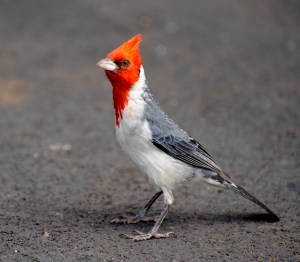
We have northern cardinals at the HQs! They are such colorful songbirds! It turns out there are cardinals here in the Pantanal. These birds don’t have a full body of red, but they are gorgeous! Let’s learn more about them.

D287A06F-67C4-4036-AF28-3AE6A8978DC2


Red-crested cardinal fun facts:

  • Red-crested cardinals have red heads, white chests and black wings and bodies.
  • These little birds grow up to 7 1/2 inches and weigh up to 1 1/2 oz.
  • They are omnivores. They eat fruit, seeds and insects.
  • A pair of cardinals is very territorial, especially during breeding season.
  • They are listed as Least Concern by the IUCN.

458D506E-A9AA-4A4B-9833-F19F87CF0BCD

We loved meeting this little bird who looks like one of our favorite backyard species! We had no idea there were other kinds of cardinals out there!

Categories: adventure, Animals, birds, camp, Children, education, Environment, nature, science, Today's Post, wildlife | Tags: , , , , , , , , , , , | 1 Comment

Piranha Relative

Piranha Relative

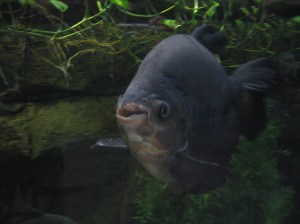
We decided to take a boat ride today to find some fish today! These funny round relatives of the piranha do not have the reputation of their cousins, but they’re no less cool!

6820F764-F9A5-45B8-93B4-BA0F2C18F109

Pacu Fun Facts: 

  • Pacu are a fresh water fish.
  • They are herbivores and feed on aquatic plants.
  • They are famous for their square teeth that resemble human teeth.
  • Pacu can grow up to 3 1/2 feet and weigh up to 88 lbs.
  • Some of them have red on their bellies and some of them do not.

16741840-7D12-4B34-8B7F-73DA27F6D426

These fish are popular in the aquarium trade. Unfortunately they can be dumped in local rivers where they are not native. They can interrupt a local ecosystem though.

Categories: adventure, Animals, Children, conservation, education, Environment, fish, nature, science, Today's Post, wildlife | Tags: , , , , , , , , | 1 Comment

What did you say birdie?

What did you say birdie?

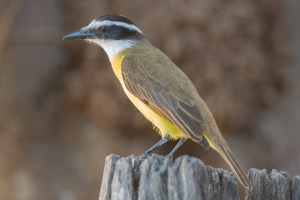
We were exploiting the area and all of the sudden heard a loud funny call! We dissolved it was a bird called the great kiskadee! And yes, they get their name from the funny call they make!

005FE1E1-AA00-4637-AB2E-A5175A151863

Great Kiskadee Fun Facts: 

  • These little birds grow up to 10 inches long  and weigh about 2 oz.
  • They are members of the flycatcher family.
  • These common birds sit and wait for their insect prey to come by, when they fly out to catch it! They are also known to eat some small vertebrates and fruit.
  • They are territorial and will even attack raptors.
  • Male and females build the nest. Females incubate the eggs.
  • They are listed as Least Concern by the IUCN.

79B44B16-1029-4AAE-9007-10BE82A7B853

These gregarious little birds are spotted all around here! We have never met a member of the flycatcher family. Who else pictures a bird with a fly swatter in the wing? Hehehehe!

Categories: adventure, Animals, birds, Children, conservation, education, Environment, nature, science, Today's Post, wildlife | Tags: , , , , , , , , , , | 1 Comment

That is Not a Pig!

That is Not a Pig!

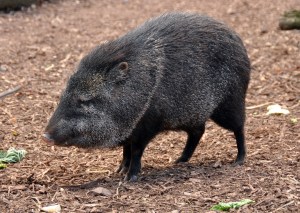
We went in search a small ungulant today! What is an ungulant you ask? Ungulant are animals that have hooves- like Edmond! We were looking to meet a collared peccary. These mammals look like pigs, but they are only distantly related. Let’s learn more about them.

F89D8330-07F2-4C78-8F9E-F73E9F9F6BB8

Collared Peccary Fun Facts: 

  • Collared peccarys grow up to 5 ft long and weigh up to 60 lbs.
  • These herbivores eat plants, fruits, nuts and small invertebrates.
  • They live in small family groups.
  • Collared peccarys have sharp tusks that face downward. They use these to protect themselves from predators.
  • They also give off a strong musky odor when threatened.
  • These diurnal animals spend their nights in burrows.
  • They are also called the javelina.

863AAF83-D9FB-4071-BD3D-BB01E4A54EC6

These funny looking animals are so cute! Have you ever heard of them? It’s fun to learn about all new animals!

Categories: adventure, Animals, Children, conservation, education, Environment, nature, science, Today's Post, wildlife | Tags: , , , , , , , , , | 1 Comment

Blog at WordPress.com.