Posts Tagged With: conservation

Feeling Blue

Feeling Blue

We are feeling blue- just kidding! We’re off to meet one regal blue bird! In fact they are the national bird of South Africa! Are you ready to learn more about the blue crane? Let’s gooooo!
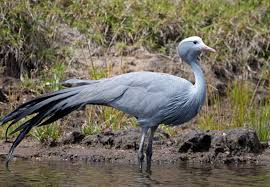
blue crane

Blue Crane Fun Facts:

  • These cranes can grow up to 40 inches tall and weigh up to 11 pounds.
  • They are known for their loud honking calls.
  • These omnivores eats grasses, seeds and small invertebrates.
  • The males perform elaborate courtship dances.
  • The entire population of blue cranes call South Africa home.
  • Blue cranes are listed as Vulnerable by the IUCN.

blue crane2

These elegant but funny looking cranes are so amazing. There are several organizations that are working to protect these neat birds, including the International Crane Foundation!
Categories: adventure, Animals, birds, Children, conservation, education, endangered species, Environment, nature, science, Today's Post, wildlife | Tags: , , , , , , , , , , | 1 Comment

Meet Ellie’s Cousin

Meet Ellie’s Cousin

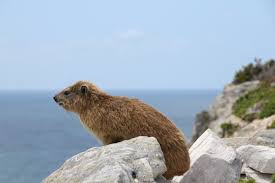
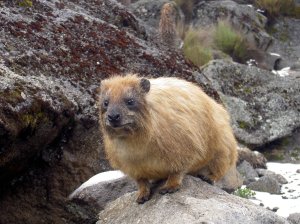
We are going to meet a small, rodent look a-like today. But, guess what? It’s not a rodent, it’s one of Ellie’s closest living relatives! Are you ready to go on today’s adventure?

5CC94F3F-FB72-4488-B82A-CD812EAEA4CE

Cape Rock Hyrax Fun Facts: 

  • Cape Hyrax can grow up to 12 inches and weigh up to 13 pounds.
  • Their teeth, toes and skull are structured like elephants.
  • These little herbivores even have two elongated teeth like the tusks of an elephant.
  • They live in family groups of 20-80 individuals.
  • Hyrax have little glands on their backs they use to mark their territory.
  • They do have elongated noses too. Males have longer noses than females.
  • Hyrax have little suction cup like pads on their feet to help climb.
  • These little prey animals can spot a predators over 900 feet away.
  • They are listed as Least Concern by the IUCN>

E47C5BD4-1118-4A1B-8402-A78D792A605D

These funny little critters of course is one of our favorites! We bet you would have never guessed they shared an ancestor with elephants.

Categories: adventure, Animals, Children, conservation, education, elephants, Environment, mammals, nature, science, Today's Post, wildlife | Tags: , , , , , , , , , | 1 Comment

Doing Some Geometry

Doing Some Geometry

We headed out today with a local tracker to find a species that is critically endangered. We did find one of these special animals and we couldn’t wait to share more about them with you!

553997A3-77EE-404F-9DE6-925AA7DA4A10

Geometric Tortoise Fun Facts: 

  • These tortoises grow put to 6 inches long.
  • They have a geometric, radiating pattern on their shell that help them camouflage.
  • These herbivores eat flowers, leaves and shoots.
  • Once thought to be extinct, a small population (around 2,000-3,000) was found in the west cape of the country.
  • They are thought to be aestivate (be dormant) in the summer.
  • Females are larger than males, but have shorter tails.
  • They are highly protected by the local conservation organizations and the government.

We were super excited to spot this little rare tortoise. They are shy, so we had to be very quiet and patient. We were lucky to have such a great tracker with us. We wonder who we might find tomorrow.

Categories: adventure, Animals, Children, conservation, education, endangered species, Environment, nature, reptiles, science, Today's Post, wildlife | Tags: , , , , , , , , , , | 1 Comment

Hello Shrew

Hello Shrew

We are off to the southern part of the country for a day trip to locate one small mammal. They are named after elephants, but we can assure you they are not elephants. Grab your gear and let’s head off on today’s adventure to meet the cape elephant shrew.

cape elephant shrew

Cape Elephant Shrew Fun Facts:

  • Shrews are distantly related to moles. They are not rodents.
  • They are also called the Cape Elephant Sengi.
  • The cape elephant shrew weighs around 50 grams.
  • These insectivores eats insects of all kinds.
  • They get their names from their long noses like look like and elephant’s trunk.
  • Their scientific name includes the word- Elephantulus.
  • They prefer dry, rocky and arid habitats.
  • They are listed as LEAST CONCERN by the IUCN.


What a joy it was to spot this tiny little animal. It’s not easy and it took some patience waiting in an area where they are known to hunt for insects. Sometime we forget that habitats all around the world have some amazing little animals. These forgotten creatures are important too.

Categories: adventure, africa, Animals, Children, conservation, education, elephants, Environment, mammals, nature, science, Today's Post, wildlife | Tags: , , , , , , , , , , | 2 Comments

Off to South Africa

Off to South Africa

Did you guess where are our next adventure will be? If you guessed South Africa- you are correct! Yay! We are off to meet some of the iconic animals of this beautiful country, but first let’s learn more about South Africa today!

BE4E1BBA-5794-42BA-9D14-6F298F57892E

South Africa Fun Facts: 

  • Table Mountain in Cape Town in one of the oldest mountains in the world.
  • The waters off the coast of South Africa can be quiet dangerous. It is believed that 2,000 shipwreck are in the waters there.
  • South Africa is the 2nd largest producer of fruits in the nation.
  • The largest land mammal, the elephant calls South Africa home, as does the smallest mammal in the world- the least dwarf shrew.
  • Around 900 species of birds call South Africa home.
  • South Africa is home to Kruger National Park. The park is a huge! It is nearly 500,000 acres.
  • Kruger is home to cheetah, elephants, springbok, rhinos, zebra, giraffe and many other species.
  • Kruger was established in 1898.


Kruger is where we will be setting up our base camp for most of this trip! We are so excited to see of the animals of this amazing spot- especially Ellie’s relatives.

Categories: adventure, Animals, Children, conservation, education, elephants, endangered species, Environment, nature, science, Today's Post, wildlife | Tags: , , , , , , , , , , , | 2 Comments

Where Will The Next E&E Adventure Be?

Where Will The Next E&E Adventure Be?

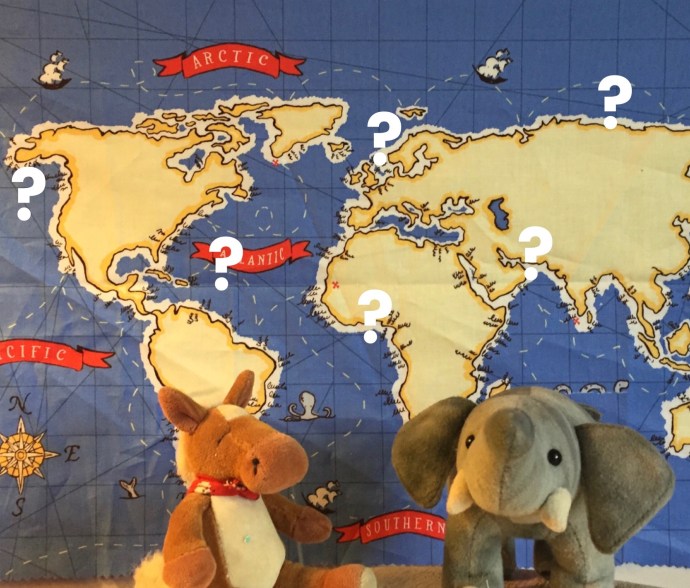
We are ready for April’s travels- are you? Can you guess where we are going from the clues?

51F1B905-6346-4DAC-B184-3A911F47CB8E

  • We are going to a country that lays on the south end of a continent.
  • There are savannas, oceans, mountain, desserts and beach habitats.
  • The oldest meteor site in the world is here.
  • It is home to some of the oldest human ancestor and mammal fossils in the world.
  • The national animals is the springbok.

Where will our next adventure be?


Categories: adventure, Animals, Children, conservation, education, Environment, science, Today's Post, wildlife | Tags: , , , , , , , , , , | 1 Comment

Hellooooo Panda!

Hellooooo Panda!

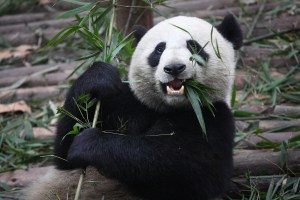
We are meeting our last animal here in China- probably the most iconic one. The Giant Panda is close to our heart. These funny bears call just a few zoos home and we have been lucky enough to have a pair and their offspring right down the road from HQs at Zoo Atlanta. Let’s learn more about these national symbols of China.

870145EE-562E-46C0-82AB-1D28812658A0

Giant Panda Fun Facts: 

  • Giant pandas live in bamboo forests in the mountains of China.
  • That bamboo makes up 99% of their diet. That’s right, these carnivores eat a mostly herbivore diet, with the occasional fish or protein.
  • Because bamboo is not very nutritional, pandas can eat 20-40 pounds a day.
  • They have an elongated wrist bone called a pseudo-thumb (fake thumb), that helps them hold bamboo.
  • Pandas grow up to 5 feet long and can weigh up to 100 lbs.
  • Females give birth to little pink cubs whose eyes and ears are closed when they are born.
  • Those cubs stay with their mom for about a year and a half.
  • Pandas are excellent climbers.
  • Fossils of giant pandas ancestors have been found that are 1-2 million years old.
  • They are listed as Vulnerable by the IUCN.

79CF8C81-92EB-40B3-9E07-8C9D98721324

These funny bears are one of our favorites. Their unusual markings make them a favorite with many people! They have a big fan club! One of our favorite comics is all about pandas- it’s called Your Brain On Pandas! Check it out!

Categories: adventure, Animals, bears, Children, conservation, education, endangered species, Environment, mammals, nature, science, Today's Post, wildlife | Tags: , , , , , , , , , , , | 1 Comment

Macaques!

Macaques!

Hello! Today we are meeting one of the most popular primates in Asia- the Rhesus Macaque! They are super cool and we hope you think so too!

66339FE0-5EEE-4D24-8B21-F411D28DD484

Rhesus Macaques Fun Facts: 

  • Rhesus macaques live in large troupes, of around 40 individuals.
  • Their groups of matriarchal, led by females.
  • Males leave their troup when they are mature.
  • These omnivores eat insects, roots, leaves and pine needles.
  • They can become a nuisance when they live near humans. They are known to steal food.
  • Rhesus macaques are highly intelligent.
  • They are excellent climbers and swimmers.
  • They are listed as Least Concern by the IUCN.

E7AB0C8C-9CBF-47EB-ACD5-FF48E31DDC71

We had such fun watching a troup of macaques in the afternoon. They spend it finding food and grooming each other and lounging. Their little faces are all so different and each individual has their own personality.

Categories: adventure, Animals, Children, conservation, education, Environment, mammals, nature, science, Today's Post, wildlife | Tags: , , , , , , , , , | 1 Comment

Flying Rodent!

Flying Rodent!

We headed out to meet to a flying rodent today.  We stayed up during the evening to spot this creature.

Red Giant Flying Squirrel


Red Giant Flying Squirrel Fun Facts: 

  • These nocturnal rodents are can grow up to 17 inches long.
  • They have flaps of skin that help them glide (not fly) in the trees.
  • Red giant flying squirrels have large eyes to help them see at night.
  • These herbivores eats leaves, cones, fruits and nuts.
  • They migrate areas to find food.
  • Females have liters twice a year.
  • They are listed as Least Concern by IUCN.

It is so cool to see these squirrels gliding in the trees! And who knew squirrels could get so big!

Categories: adventure, Animals, Children, conservation, education, Environment, nature, science, Today's Post, wildlife | Tags: , , , , , , , , , , | 1 Comment

The Original Panda

The Original Panda

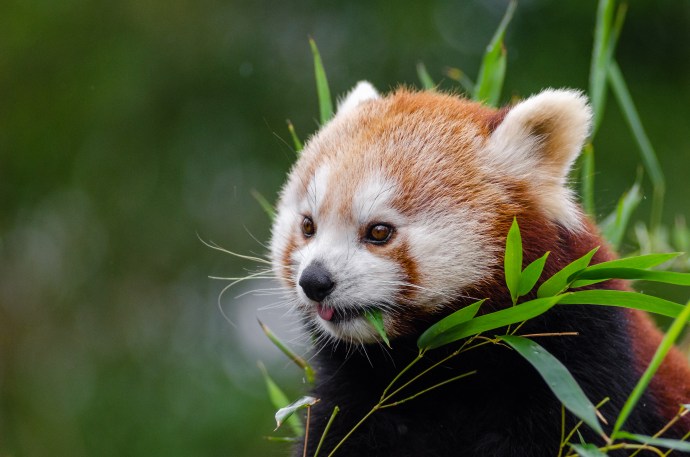
We are meeting the original panda today! That’s right- the red panda was “discovered” 50 years before the giant panda. These two pandas are not related. The red panda is related to the raccoon and giant pandas are bears. It was thought that they were related for many years as they live in similar habitats and both eat bamboo.

6B750EE1-7556-448D-A797-3EC5BF46D8FE

Red Panda Fun Facts: 

  • Red pandas can grow up to 26 inches long and weigh up to 20 pounds. Their tales can be up to 20 inches long.
  • Those tails have white rings on them.
  • These arboreal animals are mostly nocturnal.
  • Red pandas have a pseudo thumb (an elongated wrist bone) that helps them grip bamboo. These herbivores eat other things too including; eggs, fruits and nuts.
  • They are solitary animals.
  • Red pandas come together during mating season. Red panda cubs stay with their moms for about a year.
  • They are listed as Endangered by the IUCN.

4CA92E4C-1655-45D0-8147-2699D93DC817

We love the red panda. We know they have many fans out there too. Unfornately they are endangered due to habitat loss. You can learn more on how to protect them from the Red Panda Network. 

Categories: adventure, Animals, Children, conservation, education, endangered species, Environment, nature, science, Today's Post, wildlife | Tags: , , , , , , , , , , | 2 Comments

Blog at WordPress.com.